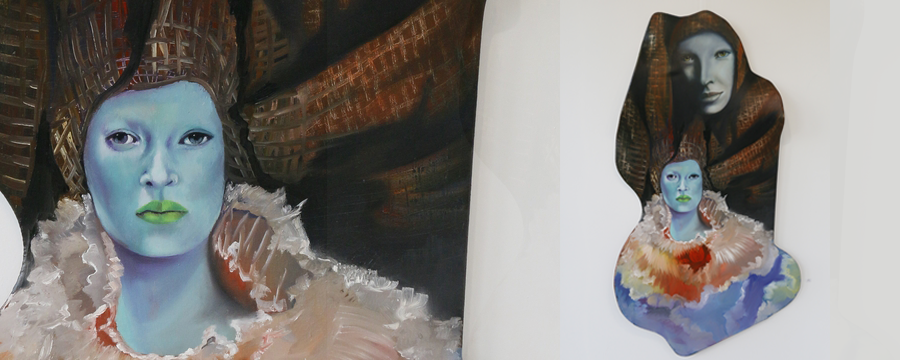
Polysemy
The structure influences the meaning of the artwork.
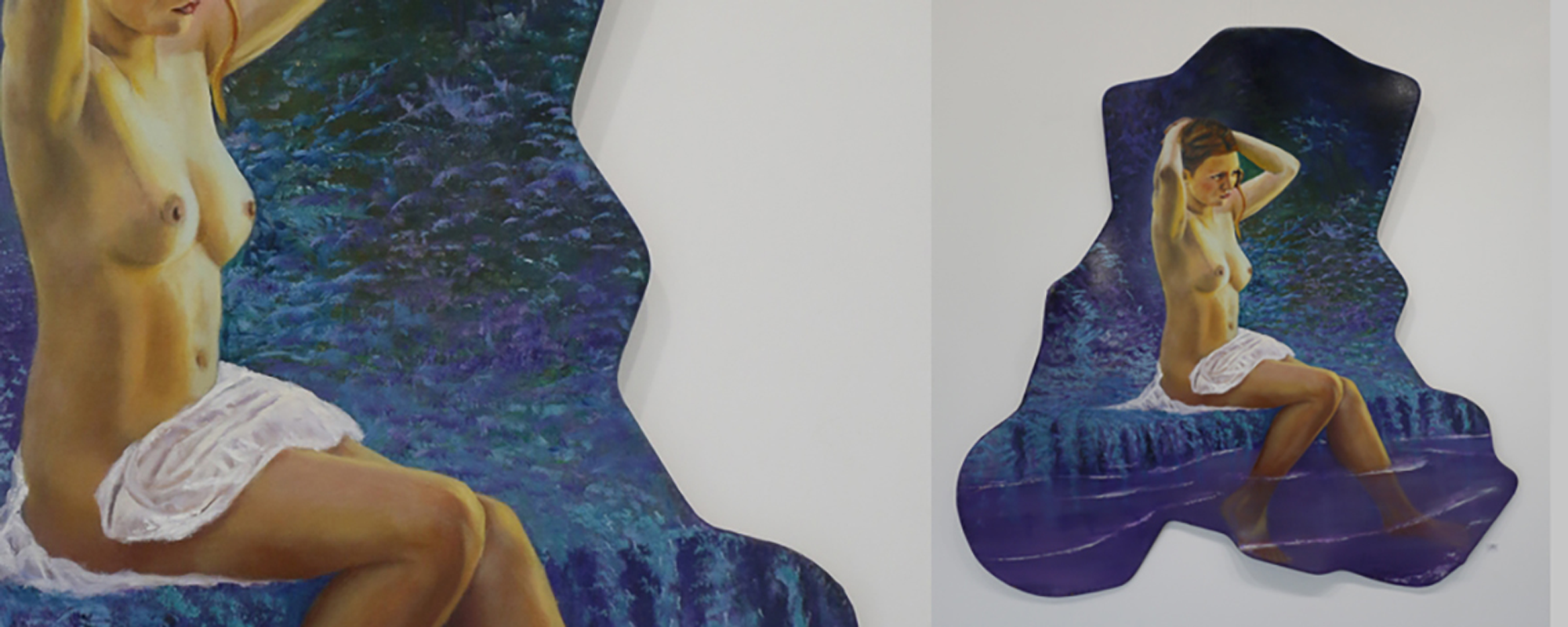
Painting & Metal
A fusion between sculpture and painting.
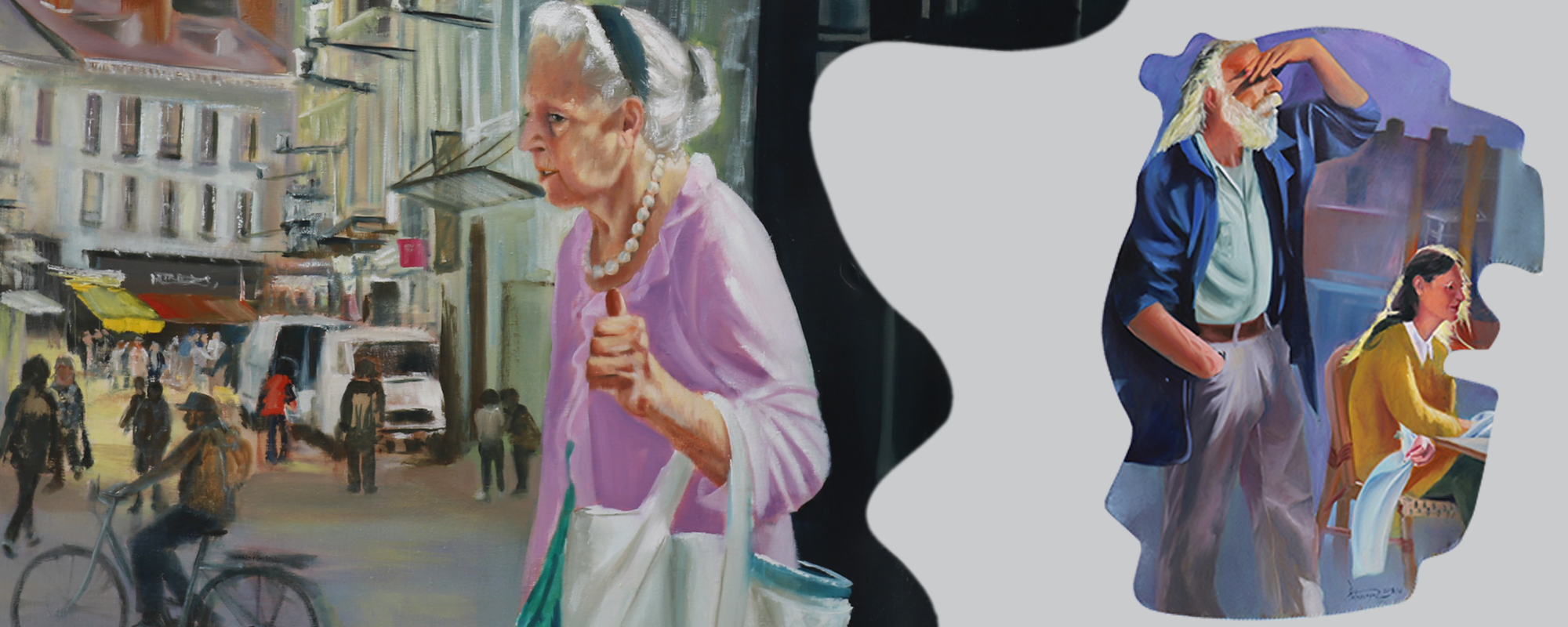
Visual Exploration
Organic and geometric forms.
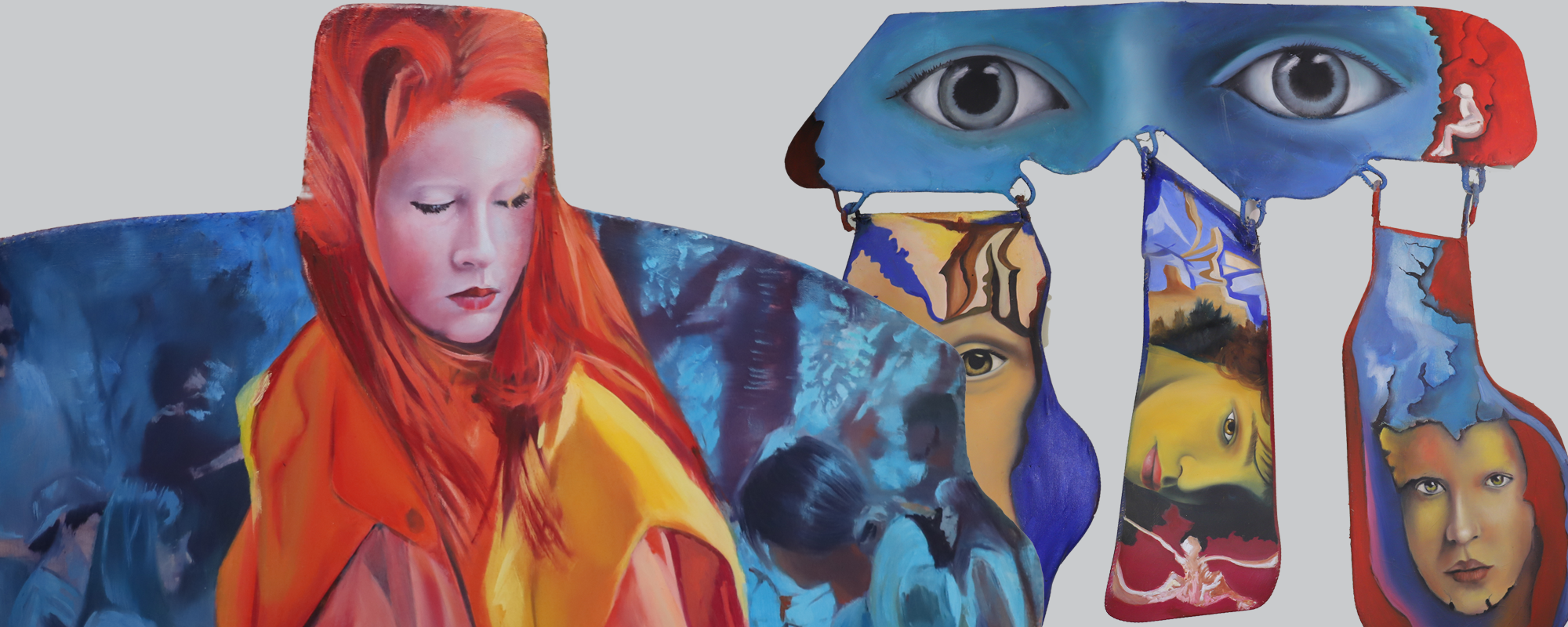
Creative Exploration
Colors, gestures and structures in motion.
Welcome
Artistic Polysemy
In his creative journey, Rafael Patarroyo discovers in the metal rod a singular means of expression. Shaped like a sculptural line, it allows him to move beyond the traditional pictorial frame and introduce organic forms that enrich the reading of the work. The rod becomes a living line: bending, twisting and transforming according to the impulses of imagination, opening a space where painting breathes differently.
The support then becomes a constitutive element of the piece. It structures space, enters into dialogue with the canvas and engages the viewer’s gaze. This transition from plane to volume opens a field of multiple interpretations, defining the polysemic dimension of his work. The viewer is no longer facing a surface, but a form that questions them, invites them to look twice and reconsider what they believe they see.
The relationship between structure and canvas becomes a true system for generating meaning. The support, far from neutral, influences composition, material tension and perception. This interaction produces polysemic works where form acts as a vector of simultaneous interpretations, creating a visual language unique to the artist.
This approach forms the foundation of the new “ism” developed by Rafael Patarroyo: Artistic Polysemy, an experimental practice that articulates structure, surface and meaning. Through his exhibitions, he presents this ongoing research where matter, form and intuition meet to reveal a singular pictorial universe.
Artwork of the Month
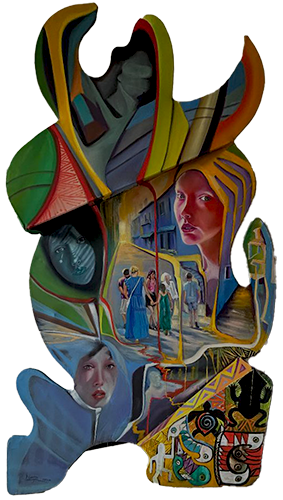
Structure in Dialogue
This piece illustrates how the metal structure defines the pictorial field. The canvas, stretched over a non‑conventional form, opens a reading where the pictorial gesture adapts to the tension of the metal. The passage from plane to volume creates a physical presence that invites the viewer to move around the work and discover its multiple facets.
It embodies one of the major axes of Artistic Polysemy: form as a generator of meaning.
Dimensions: 1.90 m x 0.95 m – Technique: oil on canvas and metal structure. Illusion is not an escape, but a crossing. It challenges the contours of reality, opens invisible thresholds and reveals, beyond limits, what reality does not say.